
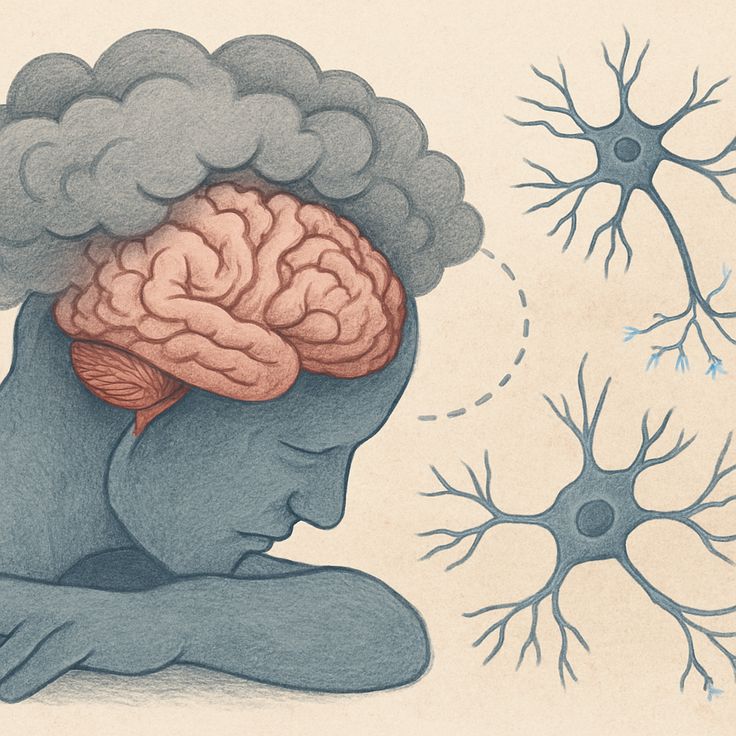
There is something quietly unsettling about losing the ability to read.
Not books. Just articles. Twelve paragraphs on a topic you actually care about. You make tea, find a quiet corner, open the laptop with genuine intention. Somewhere around paragraph four, the thumb moves on its own. Not because the writing is bad, not because interest is lost, but because something in the brain has quietly recalibrated what stimulating means, and twelve paragraphs of linear thought no longer make the cut.
We’ve all been there. Tab closed. Instagram opened. Twenty minutes pass. Phone down, feeling somehow more hollow than before. Not rested. Not informed. Just processed. Like something moved through without leaving anything behind.
I’ve been thinking about that feeling ever since. Because it isn’t laziness. It isn’t a short attention span in the way we used to mean it, a personal failing, a character flaw, something to fix with more discipline and a better morning routine. It is the entirely predictable result of a system that has been carefully, deliberately, and profitably designed to make sustained attention feel impossible.
Your exhaustion isn’t a bug. It’s the product.
The Machine Behind the Feeling
In 2004, economist Michael Goldhaber coined the term “attention economy,” the idea that in a world of information abundance, the scarce resource isn’t content, it’s the human capacity to pay attention to it. What nobody fully anticipated then was how aggressively that scarcity would be manufactured. Every platform you use has one job: to keep you on it longer than you intended. The infinite scroll removes the natural stopping point a page break or a closed newspaper once provided. The notification is engineered to arrive at unpredictable intervals, because unpredictable rewards produce more compulsive behaviour than predictable ones. This isn’t coincidence. It’s the same behaviourist psychology B.F. Skinner used with pigeons in a lab, now applied at two billion users simultaneously. Casinos are required to display warnings. Apps are not!
And yet we keep reaching for them, which is precisely the point. A longitudinal study tracking 45,000 participants found that the average human attention span has declined to 7.6 seconds, a 36.7% erosion since 2000. Researchers at Carnegie Mellon found that focus recovery after a single digital interruption takes up to 26.8 minutes. One notification. Twenty-seven minutes to get back to where you were. The phone sends how many a day?
What the Screen Is Quietly Building Inside You
Here is where it stops being a conversation about distraction and becomes something more unsettling.
In the 1960s, media theorist George Gerbner developed Cultivation Theory, one of the most important and least discussed ideas in media studies. Gerbner spent decades studying what prolonged television exposure does to heavy viewers and his conclusion was this: media doesn’t just entertain or inform you. It cultivates a version of reality inside your head. Heavy viewers didn’t just watch more, they began to perceive the world differently, seeing it as more dangerous, more threatening, more aligned with whatever the screen had been repeatedly showing them. Gerbner called this the “mean world syndrome.” The content wasn’t being passively consumed. It was quietly constructing people’s baseline assumptions about how the world works, what is normal, what is worth fearing, who deserves trust.
What Gerbner studied in 1960s television, we are now living inside at a scale he could never have imagined. The average Indian spends over four hours a day on their phone. That is four hours of algorithmically curated content, each piece selected not for accuracy or depth but for its ability to provoke a reaction. Over months and years, Cultivation Theory tells us exactly what happens next. Not just your mood shifts. Your baseline understanding of reality shifts. What feels normal, what feels threatening, what kind of person you are supposed to want to be, all of it slowly authored by an algorithm that answers to advertisers, not to you. The screen isn’t just stealing your attention. Per Gerbner, it is cultivating your worldview. The attention economy is simply charging money for the process.
Who Profits From the Fog
A fatigued, overstimulated mind is a more persuadable mind. It reaches for the simple narrative over the complicated truth. It shares before it reads. It reacts before it reflects. This is not incidental to the business model. The attention economy profits from your engagement, and engagement peaks when you are emotional, outraged, delighted, afraid, envious. Nuance does not drive engagement. Complexity does not drive engagement. The content that travels fastest is almost never the content that requires the most thought. You are not the user. You are the resource, and your fog is what makes you most valuable.
This is the part nobody wants to say out loud. The brain’s reward system becomes overstimulated from the non-stop flow of content, giving it no chance to rest and recover. Which means the thing making us tired is also the thing we reach for when we’re tired. The system is self-reinforcing in the cruelest possible way. And the worldview being cultivated inside that exhaustion, as Gerbner warned us decades ago, is not one we chose. It is one that was built for us, while we were busy scrolling.
The Question Worth Sitting With
Not going to end this with a list of tips. Not going to suggest a digital detox or a screen time limit, because those are individual solutions to a structural problem, and they place the entire burden of resistance on the person the system was designed to override.
The tiredness is real, and it has an address. It is not a personal failing. It is not a generation that can’t focus. It is the rational response of a human brain built for a different environment, now running inside a machine optimised to extract maximum engagement at minimum cognitive cost, while quietly replacing your sense of reality one scroll at a time.
Knowing that doesn’t fix it. But it changes the question.
The question stops being what is wrong with me and starts being who decided it should work this way, and what do they get from it?
That second question is worth sitting with. Slowly, without switching tabs.
Brutally honest and incredibly timely. This post puts words to a feeling I couldn’t quite name. We aren’t just tired..we’re being marketed to. Brilliant work.