
We’ve All Been There Once
Sitting alone after a long day, scrolling past a perfectly timed quote on your feed: “Everything is temporary.” It feels comforting for a moment. You take a deep breath, straighten your back, and go back to your to-do list. Because that’s what we’ve been taught, to stay strong, stay functional, stay “okay.”
But somewhere along the way, this constant composure turned into quiet exhaustion. In a world obsessed with “moving on,” we’ve turned coping into a cultural performance.
The Productivity of Pain
The modern self-help movement thrives on the idea that emotional mastery is a form of discipline. We’re told to manifest peace, optimize healing, and discipline our feelings, as if our emotions were a corporate KPI.
What began as a language of empowerment has become a subtle system of control. Every podcast, book, and reel now sells a version of strength that leaves no space for chaos. Sadness must be re-framed, grief must be useful, and pain must lead to productivity.
>We aren’t healing; we’re simply becoming better at hiding.
Yet research suggests otherwise. Studies on emotional regulation by psychologist James Gross reveal that suppression might reduce outward expression but actually heightens physiological stress and decreases emotional authenticity. In other words, the more we perform strength, the less we feel safe.
The Myth of Detachment
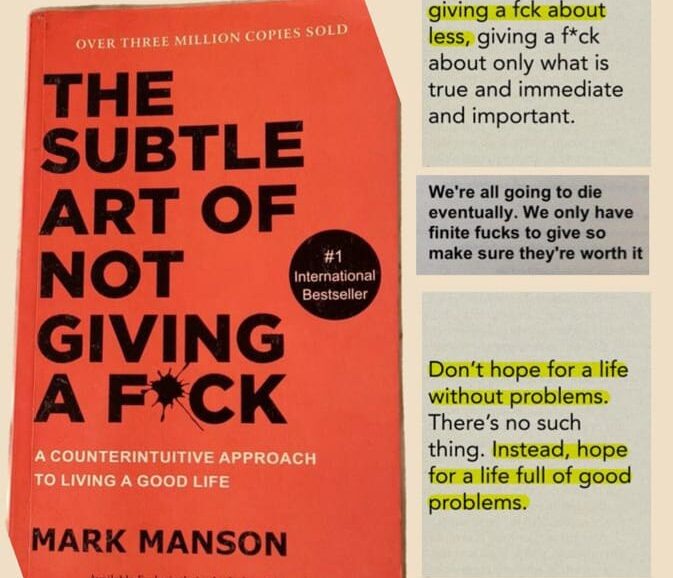
The bestsellers of our time from The Subtle Art of Not Giving a F** to countless TED Talks promote the same message. Detachment equals maturity. But indifference isn’t peace, It’s withdrawal.
True emotional intelligence lies not in avoiding emotion, but in staying present with it. Psychologist Daniel Goleman describes it as “the ability to recognize, understand, and manage both our own emotions and those of others.” That requires care, not distance.
Yet, in an attention economy where vulnerability looks inefficient, detachment becomes a survival skill. We are praised not for feeling deeply, but for bouncing back quickly.
The Motivational Machinery
Motivational culture today operates like an assembly line, mass-producing positivity. Scroll through any social media platform and you’ll see a familiar sermon: “Grind harder.” “Trust the process.” “Don’t quit.”
The irony? Today’s motivational speakers are the orthodoxical parents of the internet, enforcing emotional obedience in newer, trendier language. Where our parents once said, “Don’t cry, be strong,” these digital mentors say, “Don’t overthink, stay positive.” The tone is softer, but the commandment is the same: suppress your chaos.
This culture doesn’t encourage reflection; it rewards performance. As sociologist Eva Illouz writes, we are living in an age of emotional capitalism, where feelings are commodified and wellness becomes a product. The motivational industry, in this sense, sustains the very burnout it claims to cure.
The Psychology of Real Healing
Psychologically, healing begins where self-help ends in stillness, not strategy. Carl Rogers, one of the founding figures of humanistic psychology, wrote:
>“The curious paradox is that when I accept myself just as I am, then I can change.”
This sentence dismantles the entire self-help economy in one stroke. Healing isn’t about “getting over it.” It’s about moving through it, sitting with discomfort long enough to understand what it’s teaching you. It’s about being able to say, “I’m not okay right now,” without guilt or apology.
This process is slow, non-linear, and deeply inconvenient to a world that rewards speed. Which is exactly why it’s real.
The Collective Illusion of Self-Work
The modern idea of self-improvement is profoundly lonely. We are told to heal alone meditate alone, journal alone, succeed alone. But decades of psychological research show that emotional recovery is relational. Humans are wired for connection; we heal when we are seen, not when we are productive.
>Healing was never meant to be a solo performance. It was meant to be a shared language.
The more the self-help movement glorifies “independence,” the more it erodes our collective empathy. We start seeing others’ pain as weakness instead of reflection.
Beyond the Cult of Coping
We don’t need more books telling us to care less. We need spaces that allow us to care safely. The problem isn’t our desire to feel better it’s the pressure to feel better fast. Resilience has become a race, and peace has become a metric.
Real growth isn’t about indifference; it’s about discernment, learning where to place your care, not how to erase it. So yes, everything is temporary: your pain, your calm, your certainty. But that’s the beauty of being human. Healing isn’t about staying unbothered; it’s about staying honest.
Because feeling fully, consciously, courageously is the most radical act left in a world obsessed with coping.
Beautifully written🌻 I hope this generation understands the depth of the issue & provide each other the space to actually process emotions rather than running away from them!