
History often remembers the death of democracies as grand events—coups, revolutions, or the swift rise of authoritarian rulers. But in India, democracy is not dying with a bang. It is dying quietly, smothered by the silence of its own people.
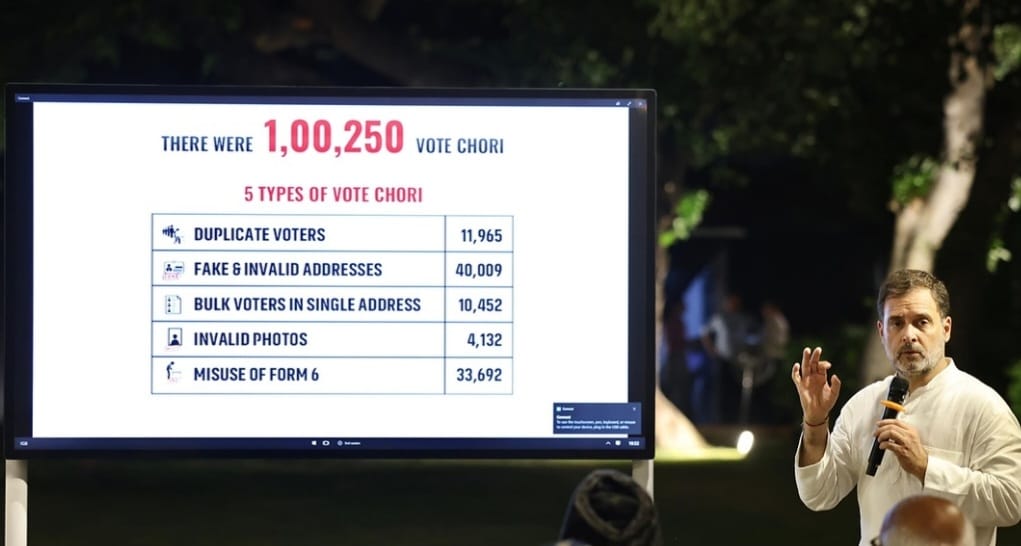
This is not just about political corruption or institutional bias. It is about a dangerous new normal: a citizenry that watches the erosion of its rights without protest. Rahul Gandhi’s recent allegations against the Election Commission, described by him as an “atom bomb,” have triggered more headlines than public outrage. What should have been a national reckoning on electoral integrity has instead revealed an uncomfortable truth: Indian democracy’s greatest crisis is not just in its institutions but in the apathy of its people.
Eroding Trust in Indian Democracy
India’s democracy rests on the credibility of its institutions, with the Election Commission historically considered a guardian of free and fair elections. When a senior political leader alleges systematic manipulation and the institution responds with bureaucratic dismissal, it is not just a political disagreement it is a crack in the foundation of democratic governance.
Over the years, concerns about the neutrality of key institutions, from the judiciary to investigative agencies have surfaced repeatedly. What makes the current situation alarming is not just the erosion of trust in these bodies but the normalization of that erosion. The Election Commission’s perceived inability or unwillingness to address allegations transparently deepens public cynicism and distances citizens from the democratic process.
The Silent Voter Crisis
Perhaps the most alarming aspect is not institutional failure but public apathy. In functioning democracies, accusations of electoral manipulation would spark outrage, mass protests, and a demand for accountability. In India today, such revelations barely stir the public consciousness.
The silence of the electorate signals a dangerous shift from active citizenship to passive spectatorship. Many voters have grown resigned to the idea that the political class will operate without transparency and that nothing they do will make a difference. This fatalistic mindset has become the perfect ally of democratic decay.
From Skepticism to Political Surrender
Skepticism is healthy in a democracy. Blind faith in political leaders or institutions is a recipe for authoritarianism. But skepticism, when left unchecked, can harden into cynicism, and cynicism often gives way to surrender.
This is the current state of Indian civic life. Instead of questioning the political establishment, large sections of the population have disengaged entirely, retreating into private life and treating politics as a spectator sport. This withdrawal not only emboldens those in power but also strips democracy of its very lifeblood: citizen participation.
The Illusion of Democratic Stability
A silent citizenry might appear to ensure social stability. Streets are calm, markets function, and daily life continues. But this is an illusion. Beneath the surface, the foundations of governance are corroding.
When citizens stop holding power to account, decisions are made without oversight, policies are implemented without debate, and elections risk becoming hollow rituals rather than genuine expressions of the people’s will. Authoritarianism rarely arrives with a declaration but normalized through each instance of public disengagement and institutional compromise. By the time the danger is visible to all, it is often too late to reverse.
Reviving India’s Active Citizenry
If Indian democracy is to survive, the first step is not institutional reform but citizen awakening. A vigilant, informed, and engaged electorate can compel institutions to act with integrity. Without this, no constitutional safeguard can withstand the pressures of concentrated political power.
Active citizenship requires more than just voting every five years. It demands consistent engagement: questioning policy decisions, demanding transparency, participating in civic discourse, and resisting attempts to polarize and distract. It also means rejecting fatalism and recognizing that democratic rights, once lost, are rarely regained without struggle.
The Final Alarm for Indian Democracy
The slow death of Indian democracy will not be remembered as a single political collapse but as countless moments when the public chose to stay silent. The Election Commission controversy is only the latest symptom of a deeper illness: the collapse of civic courage in India.
The real question is not whether democracy is under threat—that much is undeniable. The question is whether Indian citizens still have the will to protect it. Political apathy is no longer neutral; it actively accelerates democratic decay.
If this silence continues, our rights will not disappear in one dramatic sweep—they will fade, piece by piece, until they exist only on paper. By then, the obituary of Indian democracy will be signed not by politicians but by its own citizens, who had the power to act and chose not to.
Now is the moment to decide: will we remain spectators, or will we reclaim our role as the custodians of our republic? History will remember the answer.